By Wieteke Idzerda, Occupational Therapist
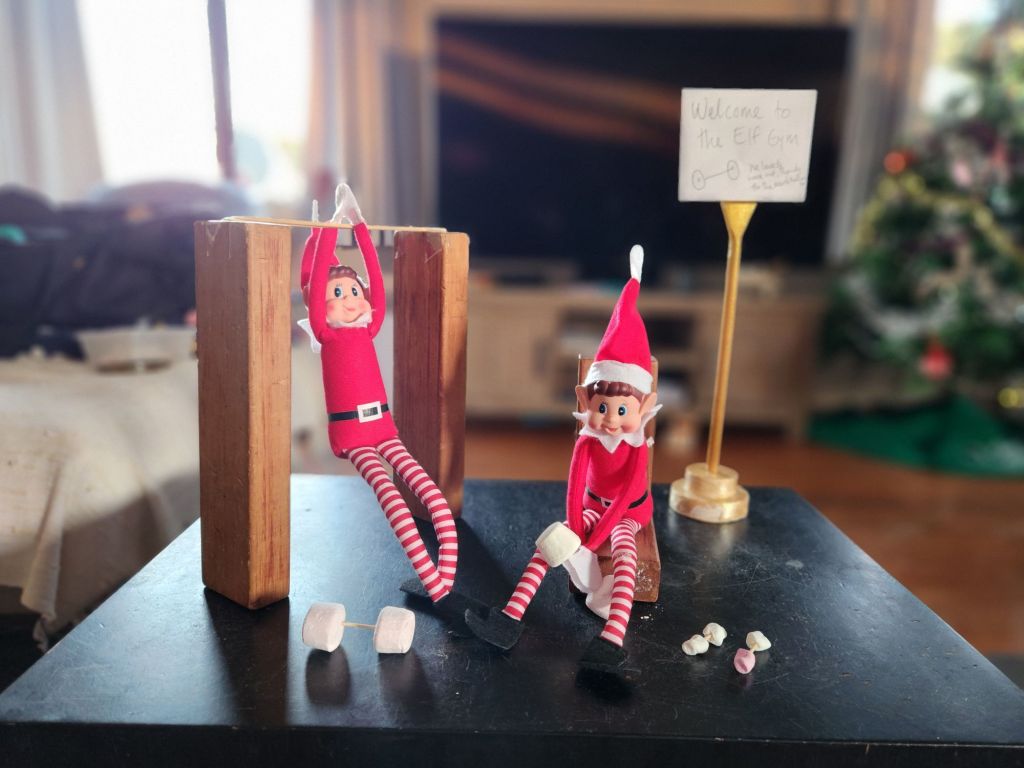
Each December, homes around the world welcome a small but mischievous visitor: the Elf on the Shelf. While often seen as a fun holiday tradition (or a creative challenge for adults!), Elf on the Shelf actually taps into many core occupational therapy (OT) principles that support children’s development, participation, and daily routines.
I’m not going to lie — this is a brand-new tradition in our household. Without trying to sound like the Grinch, I’ve resisted this “fad” for several years. My objections ranged from believing it was consumerism gone wild to feeling that Christmas doesn’t need more embellishment or feeling uncomfortable with the idea that we were telling children an elf was spying on them and reporting back to Santa so he could better manage his “nice list.” I mean it sounded a bit creepy to me!
However, when my seven-year-old son wrote to Santa this year and asked for an Elf on the Shelf, I felt my opposition finally come to an end. How could Santa (I) say no to the little guy?
So, let me tell you — I am converted. We’re halfway through December now, and honestly, we are having fun. Who would have thought it would be such an amazing outlet for my creativity and bring so much joy to our household every single morning?
So with this in mind and with Christmas just days away, I thought I’d embrace the festive spirit and make sense of Elf on the Shelf through an OT lens — purely for a bit of fun.
What I’ve discovered is that when I view this tradition this way, the elf becomes much more than a holiday spy. It becomes a playful tool for learning, self-regulation, and skill-building. This can be seen across several key occupational therapy domains, including:
● Executive function skills
● Building routines and predictability
● Social and emotional learning
● Play as a core occupation of childhood
● Sensory modulation / regulation
● Participation in activities of daily living
1. Supporting Executive Function Skills
Executive functioning includes skills such as planning, organisation, impulse control, working memory, and task initiation — all areas occupational therapists frequently support.
Elf on the Shelf naturally encourages these skills by:
● Reinforcing rules and expectations (e.g. remembering not to touch the elf)
● Supporting impulse control (resisting the urge to move the elf)
● Encouraging working memory (remembering where the elf was yesterday and what it means)
● Promoting anticipation and planning (“What will the elf do next?”)
These playful challenges reflect how OTs use structure and routine to support cognitive skill development in meaningful, motivating ways.
2. Building Routines and Predictability
Occupational therapy places a strong emphasis on daily routines, as they provide children with a sense of safety, structure, and emotional regulation.
Elf on the Shelf:
● Appears consistently during a predictable time of year
● Moves overnight, reinforcing morning routines
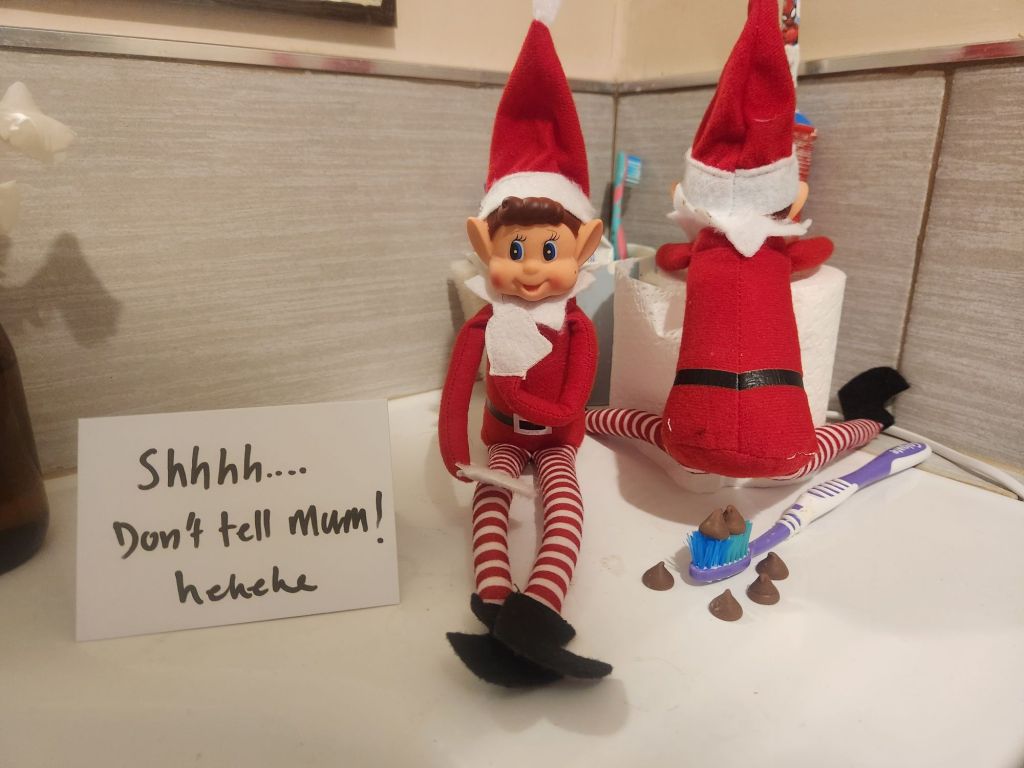
● Can be paired with daily tasks (brushing teeth, getting dressed, packing bags)
For children who struggle with transitions or anxiety, this predictable-yet-playful routine supports emotional regulation and participation in daily occupations.
3. Encouraging Social and Emotional Learning
Social-emotional development is a key area of OT practice. The elf often supports:
● Perspective-taking
● Understanding cause and effect (choices and behaviours linked to outcomes)
● Emotional awareness (excitement, disappointment, pride)
When adults talk with children, these conversations align closely with OT approaches that use storytelling, play, and reflection to support emotional regulation.
4. Promoting Play-Based Learning
Play is a primary occupation of childhood and a cornerstone of occupational therapy practice.
Elf on the Shelf invites:
● Imaginative play
● Story creation
● Problem-solving
● Humour and creativity
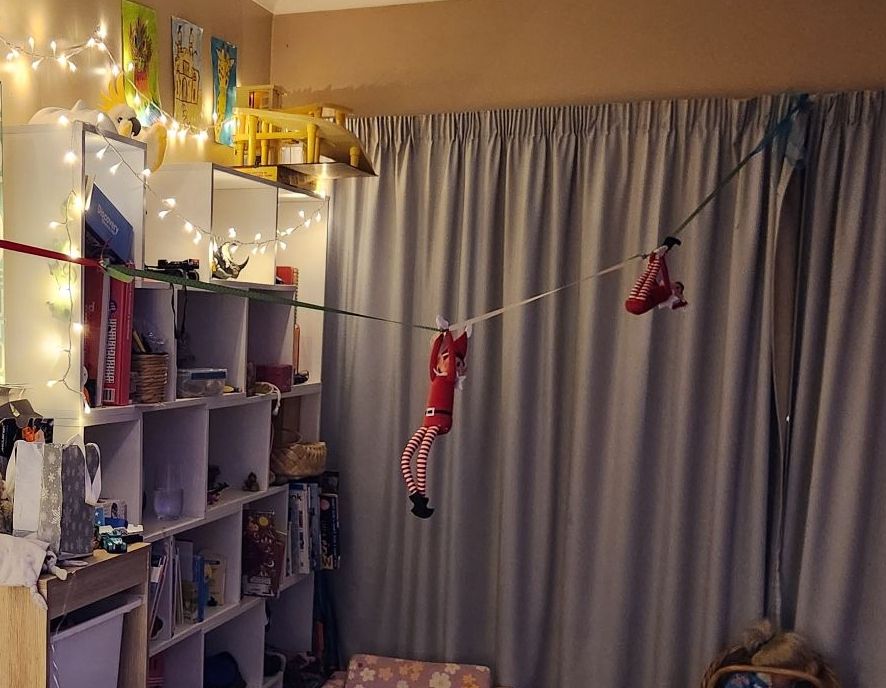
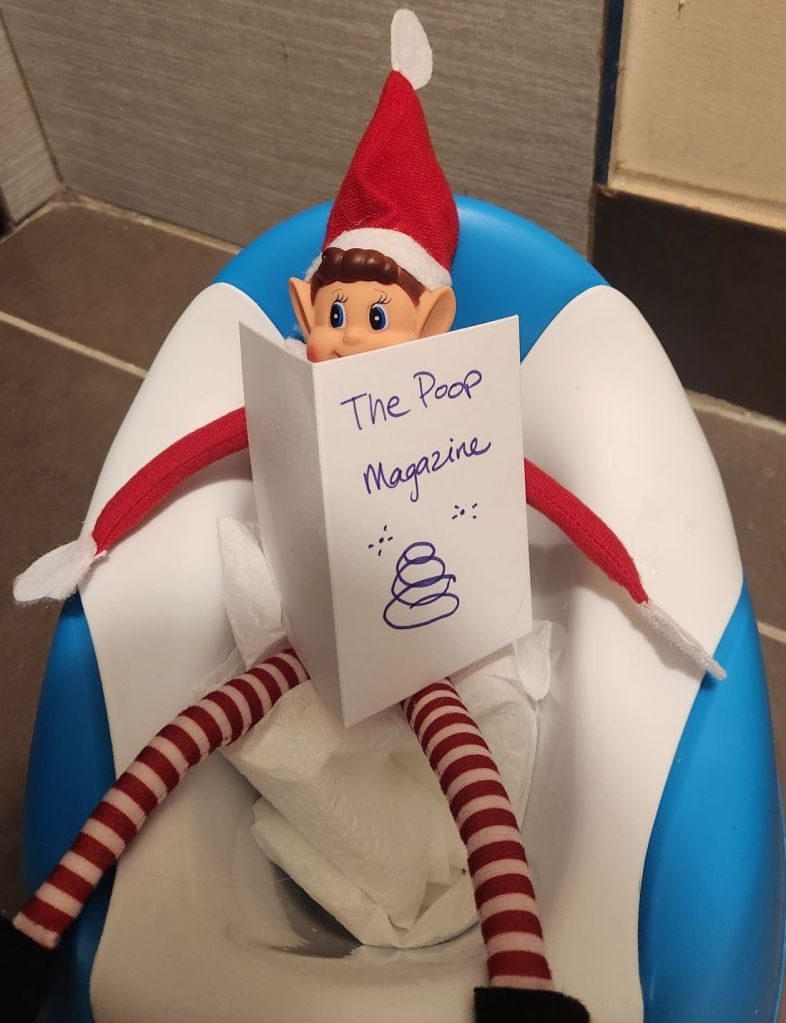
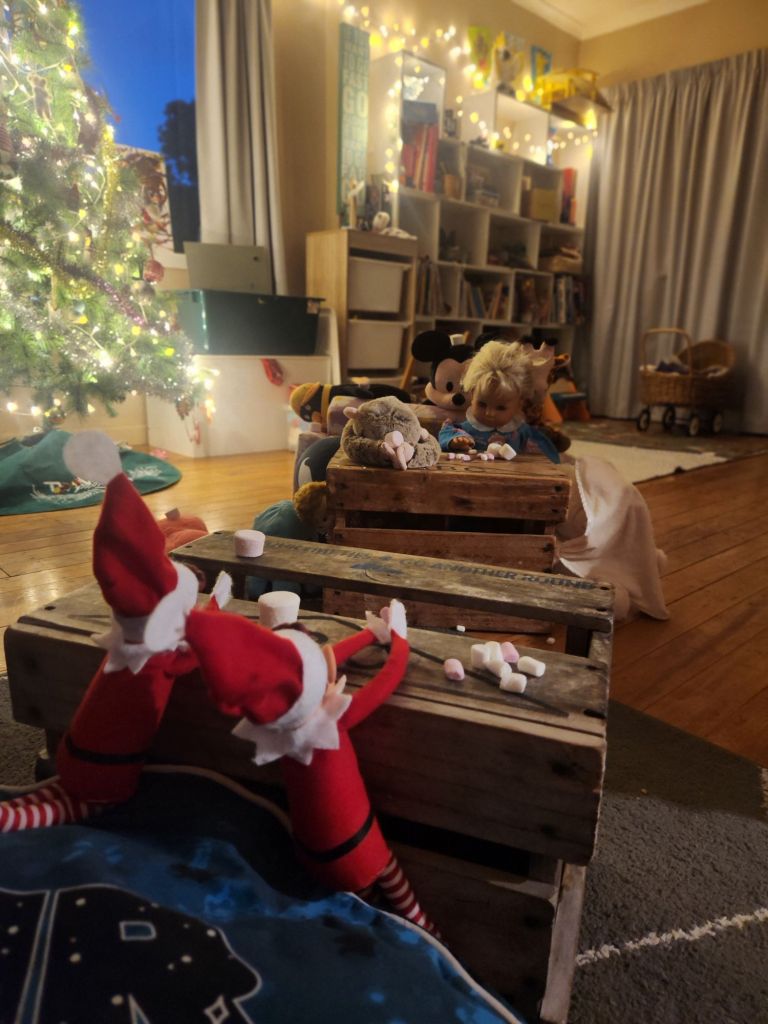
Whether the elf is ziplining across the lounge or quietly reading a book on the potty, children engage in symbolic play that supports cognitive flexibility, language development, and social understanding.
5. Supporting Sensory Regulation
Many elf scenarios can be intentionally designed to support sensory processing needs — another common focus of OT, for example:
● Quiet elf scenes for children who benefit from calm, low-stimulation mornings
● Movement-based elf ideas for children seeking vestibular or proprioceptive input
● Tactile or visual elf activities paired with regulation strategies
This mirrors how OTs adapt environments to help children feel regulated and ready to engage.
6. Encouraging Participation in Daily Occupations
Occupational therapy is ultimately about supporting participation in meaningful activities.
Elf on the Shelf can be used to:
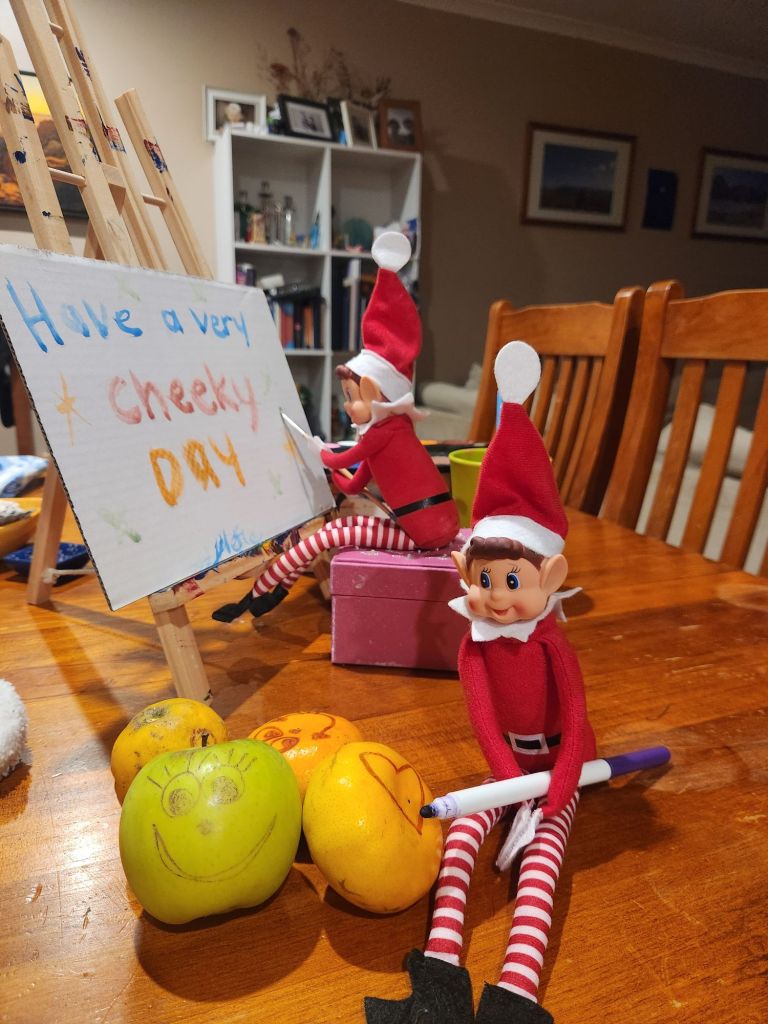
● Encourage self-care (the elf brushes teeth, packs lunch, puts on shoes)
● Model helpful behaviours (the elf cleans up or helps others)
● Increase motivation for everyday tasks
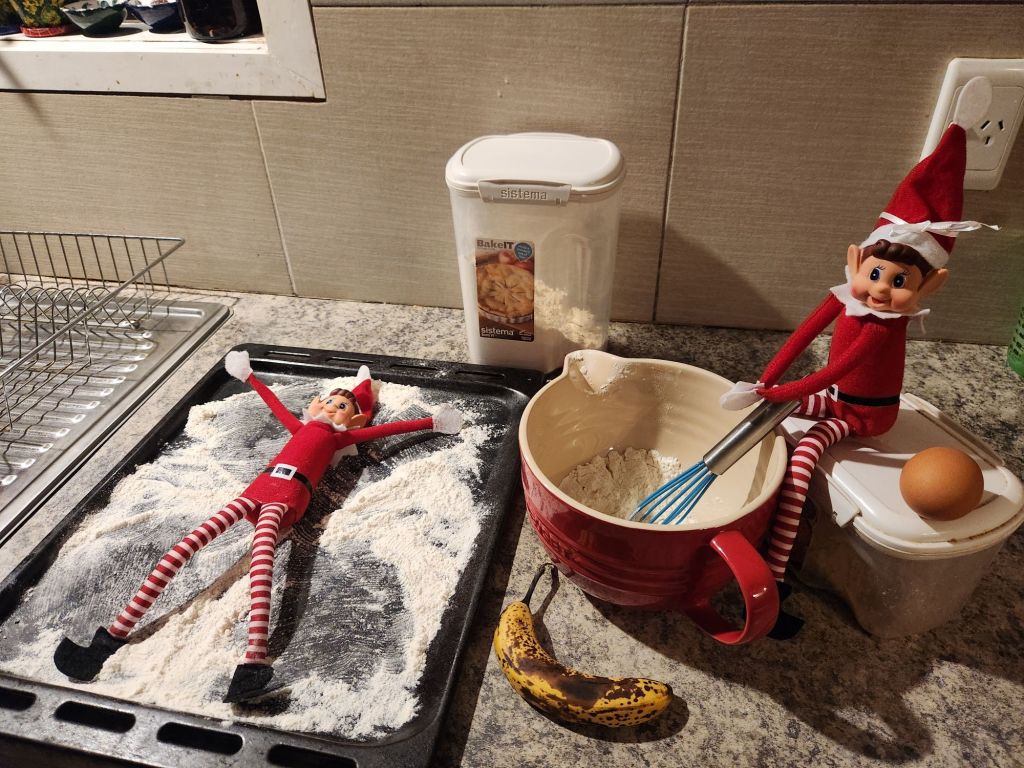
As you can tell – when viewed through an occupational therapy lens, Elf on the Shelf is much more than a Christmas tradition. It reflects key OT principles: routine, play, regulation, executive functioning, and meaningful participation. All of my most favorite aspects of Occupational Therapy. Combining all of this with a bit of imagination/creativity and a whole bunch of fun, holiday magic is made!
 Mind to Function
Leave a comment