By Wieteke Idzerda, Occupational Therapist, CRT Therapist
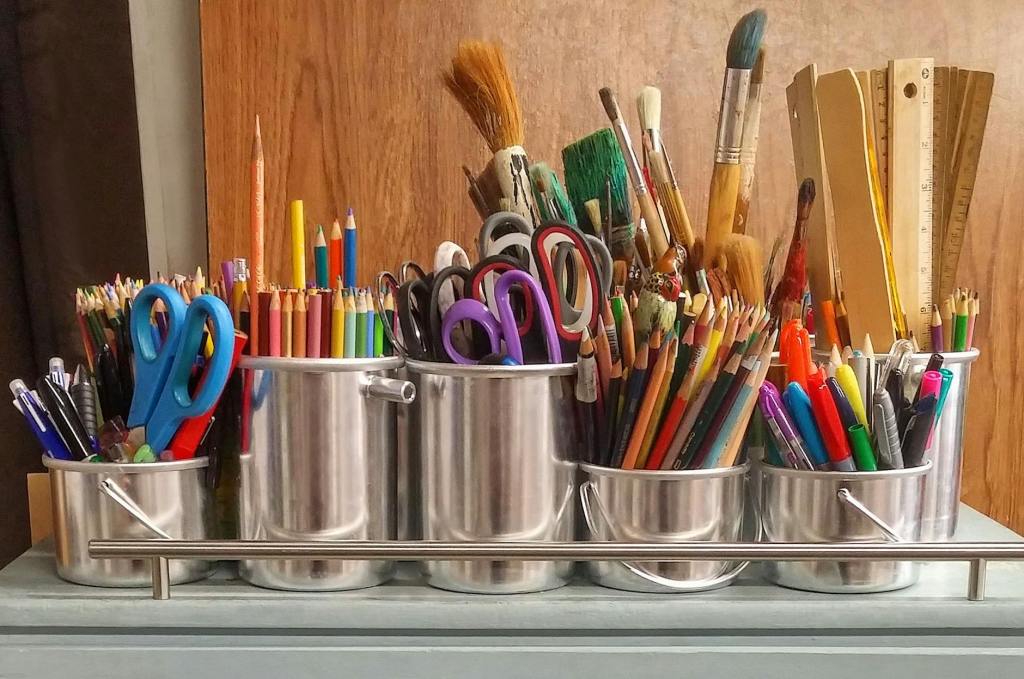
Over the years, I’ve lost count of how many times colleagues have jokingly said, “you’re such an OT,” when I bring baking into the office, or cut flowers from my garden, or when I mention a current arts and crafts project I’m working on.
It’s an understandable leap: if you’re an occupational therapist, surely you must love crafts. And sure—some of us do. But it’s probably safe to say that this assumption doesn’t hold true across the board. More importantly, occupational therapy in mental health is not just crafts.
Yes, sometimes there are crafts. No, the goal is not to send everyone home with a mildly wonky cardboard box full of snuff containers, assorted modalities, and a newly acquired glitter addiction. To be honest, considering how much I personally love crafts, I very rarely use them in my day to day practice.
Craft is a tool, not the therapy. In mental health occupational therapy, the focus is on helping people build skills, confidence, and cognitive capacity to engage in their everyday lives—thinking, planning, connecting, coping, and doing the things that matter to them. If a creative activity supports that goal, great. If it doesn’t, we don’t use it.
Because mental health OT isn’t about keeping people busy. It’s about helping people function, participate, and thrive—craft supplies are optional.
So, what does OT actually look like in mental health? Let’s bust a few myths.
Myth 1: “OT Is Just Arts and Crafts”, the trusty notion we’re good at “keeping people busy”.
Although I genuinely believe this belief has shifted over the years and there are many colleagues who know exactly what we do, somewhere along the line, OT once got branded as the profession “with scissors” or the profession “who weave baskets” (post World War II). We ended up in a position where we needed to advocate for our core skills and ring fence time in our practice to ensure we could practice “OT”. And while we do love a well-graded activity, crafts are never the point — they’re the vehicle.
In mental health OT, activities are carefully chosen to:
● Support cognitive skills (attention, planning, problem-solving)
● Regulate emotions
● Build routines
● Restore confidence
● Support participation in daily life
That “simple” activity? It might be targeting:
● Executive functioning
● Frustration tolerance
● Social interaction
● Sensory modulation
● Task initiation and completion
The craft isn’t the therapy. The thinking, doing, adapting, and reflecting is.
Myth 2: “Mental Health OT Is Just Talking”
We do talk — but we don’t stop there.
OTs in mental health focus on doing, because mental health shows up most clearly in daily occupations:
● Getting out of bed
● Showering
● Eating
● Managing appointments
● Maintaining relationships
● Making decisions
● Coping with cognitive overload
Instead of asking “How does that make you feel?” (important, but not our only tool), we might ask:
● “What happens to your thinking when tasks feel overwhelming?”
● “What makes mornings hardest?”
● “What does a good day actually look like for you?”
Then we get practical.
What OT Actually Looks Like in Mental Health
Supporting Cognition
Mental health conditions often impact:
● Attention
● Memory
● Processing speed
● Planning and organisation
● Mental flexibility
OTs help people:
● Break tasks into manageable steps
● Reduce cognitive load
● Use visual supports and routines
● Practice thinking skills in real-life contexts
Because remembering a coping strategy is one thing. Using it when your brain is overwhelmed is another.
Helping Daily Life Feel Possible Again
OTs zoom in on the everyday stuff that quietly falls apart:
● “I know how to shower — I just can’t start.”
● “I forget appointments constantly.”
● “Making decisions feels exhausting.”
● “My brain goes blank when I’m anxious.”
We work on:
● Habit and routine building
● Environmental modifications
● Energy conservation (yes, for mental health too)
● Grading activities so success is possible
No judgement. No “just try harder.” Just practical support.
Adapting the World (Not Just the Person)
Mental health OT isn’t about fixing people — it’s about fitting occupations to real human brains.
That might look like:
● Changing expectations
● Modifying tasks
● Adjusting environments
● Advocating for supports
● Normalising fluctuations in capacity
Because sometimes the problem isn’t motivation.
It’s cognitive overload.
Why This Matters:
Mental health recovery doesn’t happen in therapy rooms alone. It happens when someone can:
● Get through their day
● Participate in meaningful activities
● Feel capable again
● Reconnect with roles that matter to them
That’s the heart of occupational therapy.
Not glitter.
Not basket weaving.
Not worksheets.
Not just “keeping people busy.”
But helping people live their lives — with compassion, creativity, and cognitive insight.
So Yes… Sometimes There Is Craft
But if you see an OT running a group with paint, games, cooking, or planning activities, know this:
Behind that “simple” task is:
● Clinical reasoning
● Cognitive grading
● Mental health expertise
● And a deep belief that doing matters

Written with love by an OT who owns far too much stationary, has a love for arts and crafts, gardening and baking; and asks “what’s the occupation here?”.
 Mind to Function
Leave a comment